Vatsal Shah
 If your emails are bouncing, landing in spam, or hurting your domain reputation, the problem is usually not your copy.
It is your email list!
One bad list is enough to kill deliverability across all your campaigns.
Invalid emails, catch-all domains, inactive inboxes, and worse, spam traps all silently drag down your results before you even realize it.
That is why using an email verification tool is the first step before sending any cold email or campaign.
In this blog, I share the 5 best email verification tools in 2026 that I personally tested
You will see which tools are actually accurate, which ones work best for cold outreach, and which option makes sense based on your sending volume and use case.
Jump in and find the tool that fits your needs the best!
Email Verification Tools – TOC
TL;DR 3 Best Email Verification Tools for 2026
If you want the short answer, these are the 3 email verification tools that stood out the most in 2026 based on accuracy, ease of use, and real-world results.
- Best overall for cold email and outbound teams – Saleshandy Email Verifier
- Ideal for bulk list cleaning and high accuracy checks – NeverBounce
- Best for advanced checks and detailed verification reports – ZeroBounce
5 Best Email Verification Tools in 2026 I Tried and Tested
Each tool in my list serves a different use case.
I will break down all 5 so you can choose the one that fits your sending volume, outreach style, and risk tolerance.
1. Saleshandy Email Verifier
Saleshandy Email Verifier is built for teams that send cold emails regularly and cannot afford list quality issues.
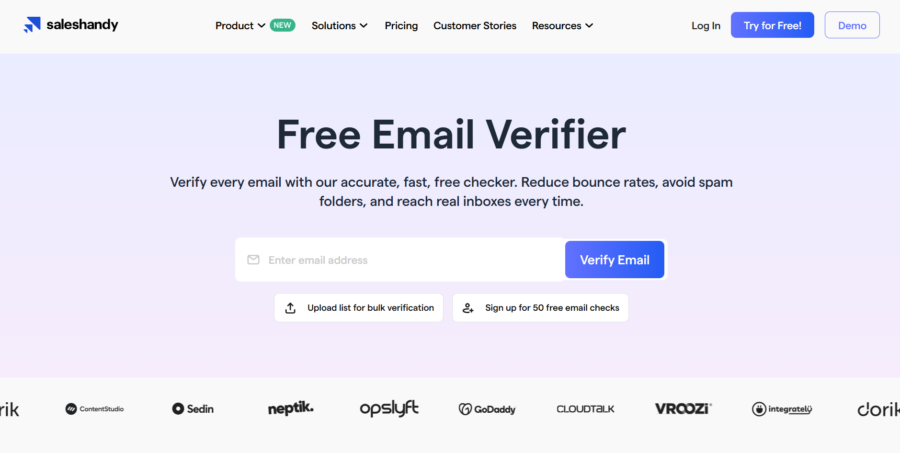
It is designed to sit close to your outreach workflow, which makes a real difference when you are running campaigns at scale.
What Saleshandy Email Verifier Does Well
Saleshandy focuses on reducing risk before you hit send.
It checks email addresses in real time using multiple signals to identify invalid inboxes, risky domains, and addresses that are likely to bounce.
It verifies:
- Invalid and non existent email addresses
- Catch all domains
- Role based emails like info or support
- High risk addresses that can hurt deliverability
This makes it especially useful for cold email campaigns where sender reputation matters more than list size.
Accuracy and Verification Quality
In my testing, Saleshandy performed well on business email lists sourced from LinkedIn and enrichment tools.
It was consistent at flagging risky and catch all emails instead of blindly marking them as safe.
That matters because catch all emails are not bad by default, but sending to too many of them without control can damage your domain over time.
Saleshandy helps you separate safe emails from risky ones so you can decide how aggressive you want to be.
Best Use Case
Saleshandy Email Verifier is best suited for:
- Cold email outreach teams
- Sales and growth teams running outbound campaigns
- Agencies managing multiple client campaigns
- Users who want verification before sequencing, not as a separate step
If your primary goal is protecting deliverability while scaling outreach, this tool fits well.
Pricing
Saleshandy Email Verifier is an add-on product of Saleshandy.
You can get 30k verification credits for $79.
2. NeverBounce
NeverBounce is built for speed and scale.
It is commonly used by teams that handle large email lists and need quick verification without slowing down campaigns.
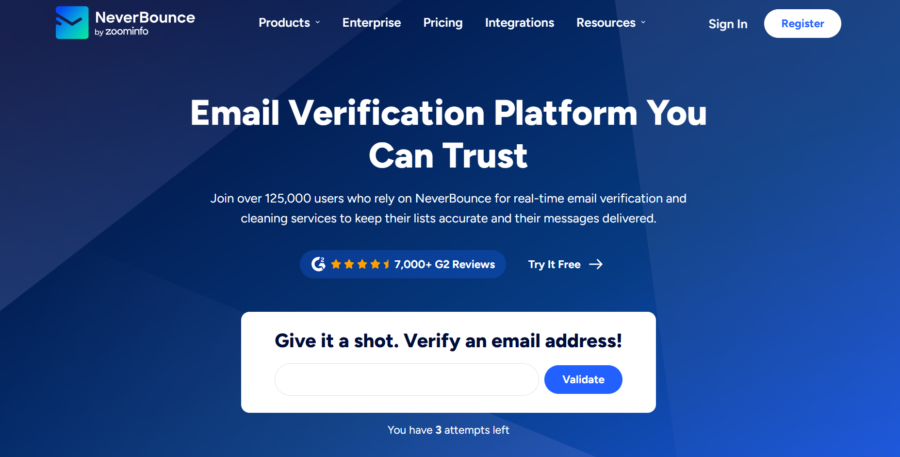
It works well as a standalone email verification tool and integrates easily with CRMs, ESPs, and lead generation platforms.
What NeverBounce Does Well
NeverBounce focuses on bulk list cleaning with fast processing times. It is designed to verify large volumes of emails in minutes while maintaining reliable accuracy.
It verifies:
- Invalid and non existent email addresses
- Disposable and temporary emails
- Catch all domains
- Role based email addresses
This makes it a strong option when you need to clean big lists before uploads or migrations.
Accuracy and Verification Quality
In testing, NeverBounce handled bulk business lists efficiently and flagged obvious invalid and risky emails accurately.
It is especially strong at bounce prevention, which helps keep bounce rates under control.
However, it tends to classify many catch all emails as unknown rather than safe or risky, which means you still need to decide how to handle those addresses.
Best Use Case
NeverBounce is best suited for:
- Bulk email list verification
- Marketing teams cleaning large databases
- ESP focused campaigns
- Teams that prioritize speed and scale
If you deal with high volume lists and want fast results, this tool fits well.
Pricing
NeverBounce uses a credit based pricing model.
Pricing starts around:
- $0.008 per email for smaller volumes
- Lower per email cost at higher volumes
You pay only for verified emails, which works well for one time or periodic list cleaning.
3. Bouncer
Bouncer is a lightweight and easy to use email verification tool focused on simplicity and accuracy.
It is often chosen by small teams and solo users who want quick list checks without complexity.
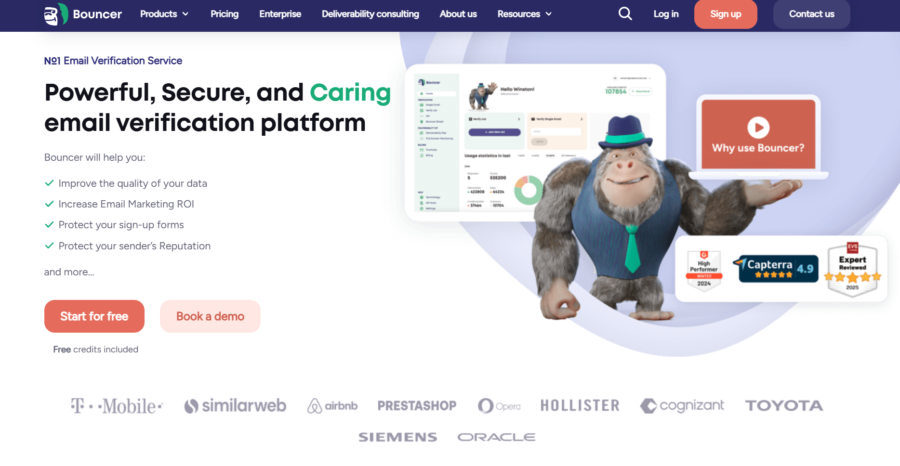
What Bouncer Does Well
Bouncer focuses on clean verification with minimal setup.
It verifies:
- Invalid email addresses
- Catch all domains
- Role based emails
- Disposable addresses
It also provides clear status labels that are easy to understand.
Accuracy and Verification Quality
In testing, Bouncer delivered solid accuracy on small to medium sized lists.
It handled business emails well and clearly flagged risky domains.
While it does not offer deep risk signals like spam trap detection, it performs reliably for standard verification needs.
Best Use Case
Bouncer is best suited for:
- Small teams and founders
- Freelancers and consultants
- One time list cleaning
- Simple verification needs
If you want a clean interface and straightforward results, Bouncer is a good choice.
Pricing
Bouncer uses a credit based pricing model.
Pricing usually starts around:
- $0.005 to $0.008 per email depending on volume
Credits do not expire, which is useful for occasional usage.
4. ZeroBounce
ZeroBounce positions itself as more than just an email verification tool. It focuses heavily on risk detection and deliverability protection.
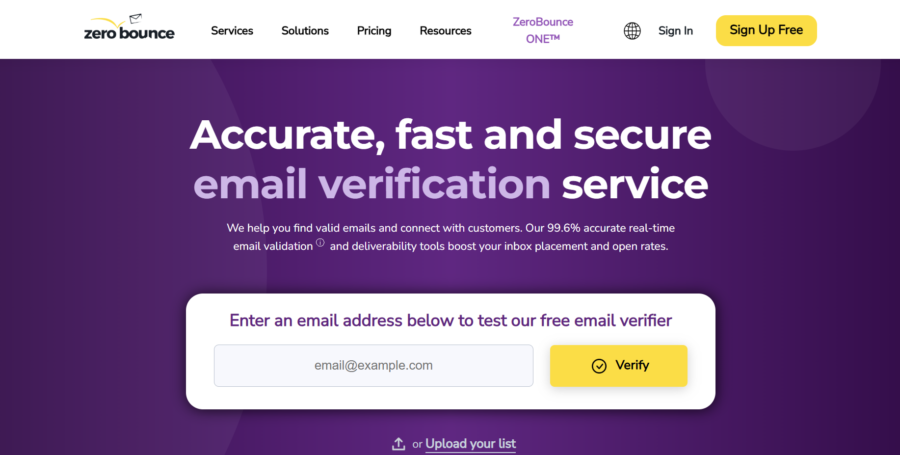
It is commonly used by teams that want deeper insights beyond basic valid or invalid status.
What ZeroBounce Does Well
ZeroBounce provides advanced checks that go beyond basic verification.
It verifies:
- Invalid and inactive email addresses
- Spam traps and abuse emails
- Catch all domains
- Role based emails
- Email activity signals
It also provides additional metadata like email age and engagement indicators.
Accuracy and Verification Quality
In testing, ZeroBounce performed well at identifying high-risk emails such as spam traps and abusive addresses.
This makes it useful for teams that operate in strict deliverability environments.
The verification process is slightly slower compared to lightweight tools, but the tradeoff is deeper risk analysis.
Best Use Case
ZeroBounce is best suited for:
- Deliverability focused teams
- Large senders with strict reputation requirements
- Businesses sending newsletters or promotions
- Teams that want risk scoring and deeper insights
If avoiding spam complaints and traps is your top priority, ZeroBounce is a strong option.
Pricing
ZeroBounce follows a credit based pricing model.
Pricing typically starts around:
- $0.008 per email for smaller packs
- Discounts for higher volume usage
Free trial credits are usually available to test accuracy before committing.
Explore these ZeroBounce alternatives for similar email verification tools.
5. Emailable
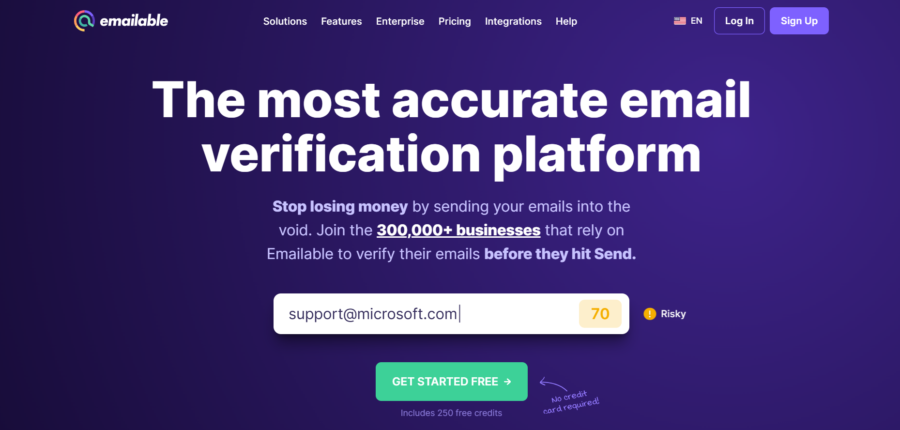
Emailable is a flexible email verification tool built for both simple list cleaning and automated workflows.
It offers strong API support and integrations, making it popular with product and engineering driven teams.
What Emailable Does Well
Emailable focuses on reliability and automation.
It verifies:
- Invalid and non existent email addresses
- Catch all domains
- Disposable and temporary emails
- Role based inboxes
It also supports real time verification through APIs and webhooks.
Accuracy and Verification Quality
In testing, Emailable showed consistent results across business email lists.
It handles catch all domains more transparently by marking them clearly instead of forcing a safe or unsafe label.
This helps teams apply their own sending rules.
Best Use Case
Emailable is best suited for:
- SaaS products needing real time verification
- Teams using APIs and automation
- Lead forms and signup validation
- Businesses that want flexibility in workflows
If you need verification baked into systems rather than manual uploads, Emailable works well.
Pricing
Emailable uses usage based pricing.
Pricing generally starts around:
- $0.006 to $0.009 per email depending on volume
You only pay for processed emails, which keeps costs predictable.
Verify Your Emails and Reach Out More Efficiently
Keeping your email list clean is the easiest way to protect deliverability and improve results.
The right email verification tool helps you reduce bounces, avoid spam traps, and reach real inboxes consistently.
Pick a tool that matches your sending volume and outreach style, then verify every list before you hit send.
Email Verification Tools FAQs
1. Why You Should Use Email Verification Tools Before Sending Emails?
Email verification tools help you remove invalid and risky email addresses before sending.
This reduces bounce rates, protects your domain reputation, and improves inbox placement.
Sending to a bad list even once can hurt deliverability across all future campaigns.
2. How to Choose the Right Email Verification Tool for Your Needs?
Start by matching the tool to your use case.
For cold emails, accuracy and risk detection matter more than speed.
For bulk marketing lists, fast processing and scale matter.
Also consider pricing, integrations, and how easily the tool fits into your workflow.
3. Which Is the Best Email Verification Tool for Cold Emails?
The best email verification tool for cold emails is one that clearly flags risky and catch all addresses instead of marking everything as safe.
Tools that integrate closely with outreach workflows and prioritize sender reputation work better for cold email campaigns.
4. What Is the Difference Between Email Verification and Email Validation?
Email validation checks the format of an email address, like syntax and domain structure.
Email verification goes further by checking whether the inbox actually exists and can receive emails.
Verification is what protects deliverability in real sending scenarios.