 Vatsal Shah
 Every cold emailer and email marketer should know this:
“The content of your email plays a big role in deliverability.”
For a long time, spam filter algorithms looked for specific keywords in email content to decide where an email should land.
That has changed.
Today, spam filters look at
- Whole phrases
- Context
- Tone and language
Together, these signals decide whether your email reaches the inbox or gets pushed to spam or the promotions tab.
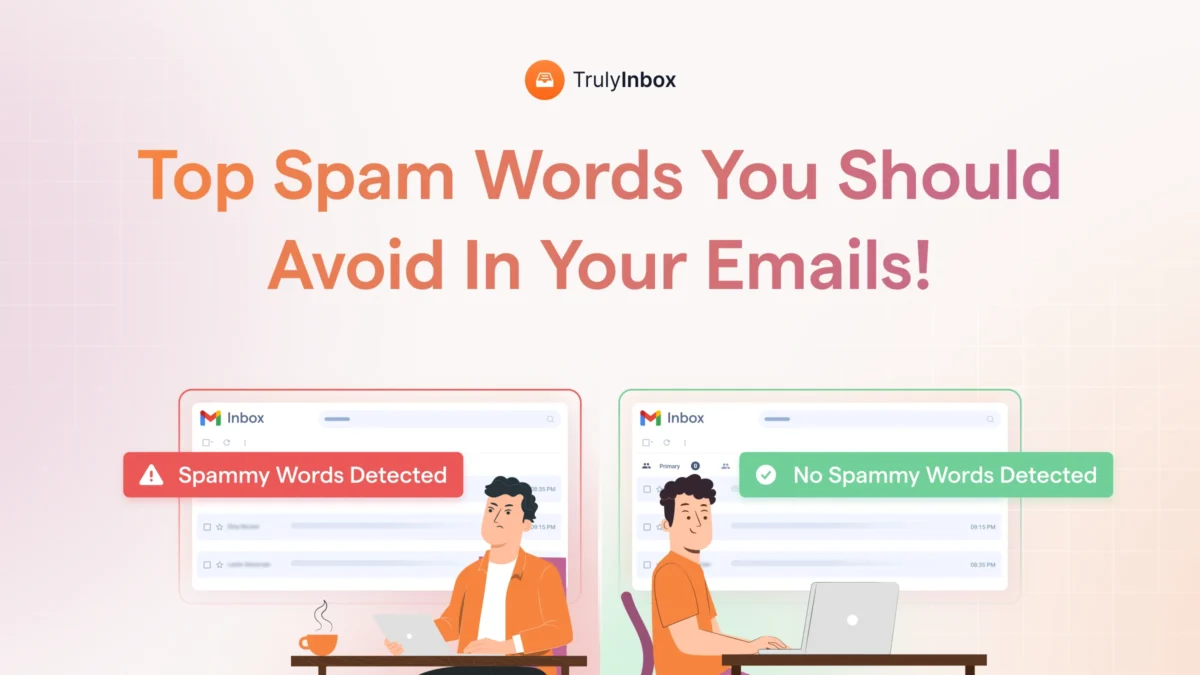
So if you want to land in the Primary inbox and not sound like a scam email, here are 100+ words and phrases you should avoid using carelessly in your cold and marketing emails.
Spam Words To Avoid In Emails – TOC
What are Spam Triggering Words?
Spam triggering words, or simply spam words, are words or phrases that increase the likelihood of an email being flagged by spam filters when used in certain contexts.
Some common words or phrases include:
- Guaranteed results
- Act now
- Limited time offer
- Risk free, etc.
These words gained a bad reputation because they were repeatedly abused in scammy, misleading, and overly aggressive emails.
Over time, spam filters learned to associate this kind of language with low trust behavior.
Categories of Spam Words That Email Filters Watch Closely
Email spam filters do not rely on a fixed list of words that they block blindly.
What they actually look for are language patterns that often appear in low trust or misleading emails.
These patterns can be grouped into a few clear categories:
- Exaggerated claims and guarantees
- Urgency and pressure based language
- Easy money and financial shortcuts
- Forced trust and reassurance
- Overly promotional or hype driven language
Even if your intention is genuine, using a phrase that falls under these categories can make your email content read like spam.
When that happens, spam filters are far more likely to push your message away from the Primary inbox.
This effect is even stronger for cold emails, where trust has not been established yet.
100+ Spam Triggering Words And Phrases You Should Avoid in Your Emails
I have curated this list of commonly flagged spam-triggering words and phrases based on how modern spam filters evaluate email content today.
These words and phrases are grouped by intent so you can understand why they raise red flags, not just what to avoid.
Use this list as a reference, not a checklist.
- Overly Promotional or Hype Driven Language
- Exaggerated Claims and Guarantees
- Urgency and Pressure Based Language
- Action Instruction Language
- Easy Money and Financial Shortcuts
- Forced Trust and Reassurance Language
- Consent, Subscription, and Selection Language
- Account, Security, and Access Language
1. Overly Promotional or Hype Driven Language
- Amazing offer
- Incredible deal
- Best solution ever
- Game changing
- Revolutionary product
- Unbelievable value
- Must see
- Top rated solution
- Premium offer
- Exclusive deal
- Next level results
- Ultimate solution
- Breakthrough offer
- Insane value
- One of a kind
- Industry leading
- Powerful solution
2. Exaggerated Claims and Guarantees
- Guaranteed results
- One hundred percent guaranteed
- Works every time
- Instant success
- Proven formula
- Flawless results
- No failure
- Success assured
- Miracle solution
- Perfect results
- Zero risk
- Absolute guarantee
- Results in minutes
- Never fails
- Total success
3. Urgency and Pressure Based Language
- Act now
- Limited time offer
- Final chance
- Offer expires soon
- Last opportunity
- Hurry up
- Only today
- Respond immediately
- Deadline approaching
- Do not miss out
- Before it is too late
- Time sensitive
- Final reminder
- Ending soon
4. Action Instruction Language
- Click here
- Click below
- Reply now
- Take action
- Get started now
- Download now
- Sign up today
- Confirm now
- Complete this step
- Follow the link
- Submit immediately
- Act on this
- Open this link
5. Easy Money and Financial Shortcuts
- Make money fast
- Earn quick cash
- Easy income
- Financial freedom
- Double your income
- Passive income
- Fast cash
- Extra income guaranteed
- No investment needed
- Earn from home
- High paying opportunity
- Unlimited earnings
- Daily profits
- Free money
6. Forced Trust and Reassurance Language
- This is not a scam
- Trust us
- Completely safe
- Totally legit
- Honest offer
- No tricks involved
- Guaranteed safety
- Verified deal
- Real opportunity
- You can trust this
- No hidden agenda
- Legit offer
7. Consent, Subscription, and Selection Language
- You were selected
- Special invitation
- Chosen exclusively
- Selected for you
- Member only offer
- Invitation inside
- Reserved for you
- Exclusive access
- Pre approved
- You qualify
8. Account, Security, and Access Language
- Verify your account
- Account update required
- Security alert
- Action required
- Access suspended
- Confirm your identity
- Login required
- Password reset
- Unusual activity detected
- Account verification needed
Many of these words are safe when used naturally.
They only become problematic when stacked together, forced into subject lines, or used without clear context.
Spam filters do not punish vocabulary. They punish patterns that resemble spam behavior!
Spam Words – FAQs
1. Should I avoid spam and promotional words completely?
Yes. As a rule, you should avoid spammy and overly promotional words as much as possible.
Even when they do not cause immediate issues, they add unnecessary risk to your emails.
2. Is avoiding spam words enough to fix deliverability?
No. Deliverability depends on many factors.
But removing spammy and promotional language is one of the easiest and safest improvements you can make.
3. Are spam words riskier in cold emails than marketing emails?
Yes. Spam words are riskier in cold emails because the human factor plays a much bigger role.
In cold emails, recipients did not ask to hear from you.
If your message sounds spammy, salesy, or misleading, they are far more likely to report it as spam. These user actions directly damage sender reputation and future deliverability.
In marketing emails, recipients have opted in and expect communication from you. This makes them more tolerant of promotional language.
Even then, overusing spammy words can still push emails into the promotions tab or reduce engagement.
4. Are spam words the same across providers likeGmail, Outlook, and Yahoo, etc?
No. Each provider weighs signals differently, but spammy language is risky across all of them.