 Vatsal Shah
 Email warm up feels controversial in 2026.
Some say spam filters are too smart for it to matter. Others rely on it and get perfect inbox placement.
Given the mixed opinions, it is easy to assume that warm-ups no longer work.
But I am here to say one thing clearly.
Email warm up works. It worked in 2024, 2025, and it will work in 2026.
In this blog, I will clearly explain why email warm up works and why it is still a highly recommended practice in 2026.
Does Email Warm Up Work – TOC
What Is the Purpose of Email Warm Up?
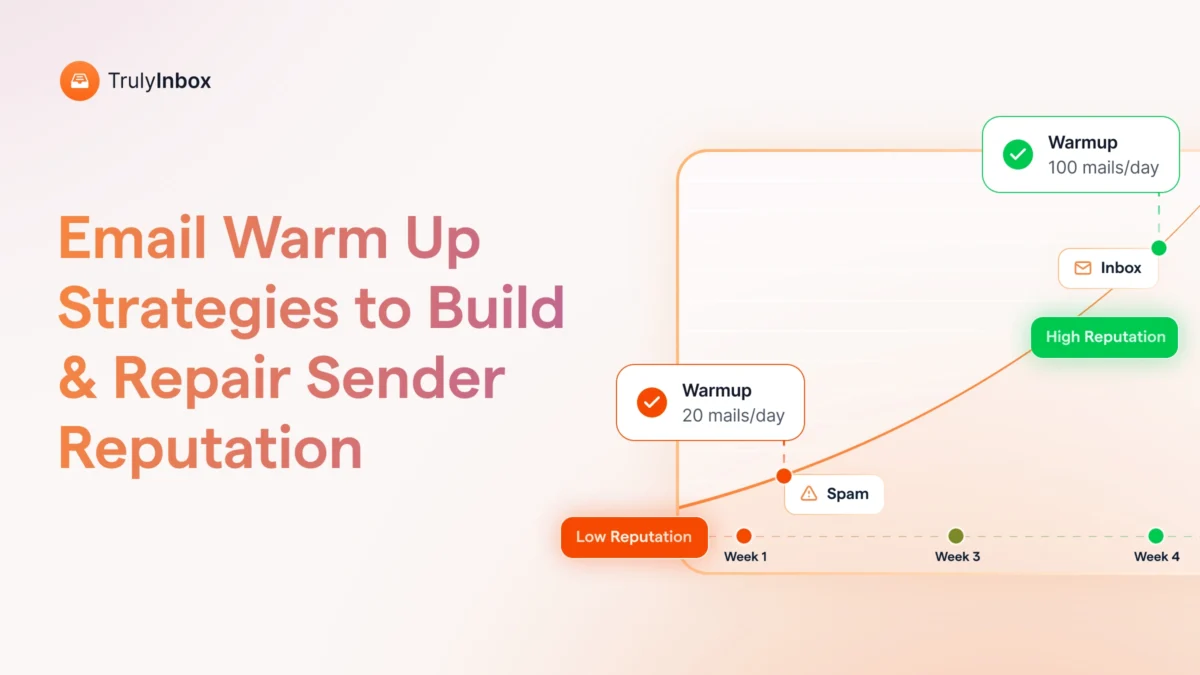
The purpose of email warm-up is to build sender reputation gradually before you start sending real emails.
You should warm up new email accounts, inactive inboxes, or accounts that have already been used for outreach.
- In the case of new email accounts, inbox providers have no prior data to judge you.
So if you start sending outreach emails immediately, even at low volume, you may end up in spam. - In inactive email accounts, the risk is slightly different.
Sudden sending activity after long periods of inactivity can trigger spam filters. - Email accounts used for earlier outreach may have suffered reputation damage.
Warm-up helps improve your reputation before you resume sending.
In simple terms, email warm up prepares your inbox for outreach by creating consistent sending behavior.
That is why it remains an important step for improving email deliverability and inbox placement in 2026.
What Inbox Providers Check Before Trusting Your Emails?
To understand the importance of email warm up, you first need to understand how inbox providers decide whether to trust a sender.
Email service providers (ESPs) like Gmail, Outlook, Yahoo, etc., closely look at your overall sending behavior and observe how your email account behaves over time.
While the exact algorithms differ across providers, they generally pay close attention to a few common factors, such as:
- Whether your email setup looks legitimate
- Your sender and domain reputation
- How consistently you send emails
- Sudden spikes or irregular sending patterns
- How recipients interact with your emails
- Bounce rates and spam complaints
All of these signals, along with several others, help inbox providers decide where your emails should land.
This could be the Primary tab, the Promotions tab, the Spam folder, or somewhere else entirely.
- Unnatural or automated-looking activity increases the risk of spam placement.
- Overly promotional messaging is more likely to land in the Promotions tab.
To land in the Primary tab, you need to look natural as a sender and send with the right intent.
Your emails should feel like genuine conversations, and your sending patterns should reflect how a real person would normally use email.
How Email Warm Up Tools Help?
Email warm-up tools exist to solve a practical problem.
Warming up email accounts manually.
Most people struggle to send at the right pace, maintain regular activity, and avoid long gaps or sudden spikes.
These inconsistencies can hurt deliverability, especially during the early stages of sending.
Email warm up services bring the much-needed discipline to the process.
They start low and gradually increase your sending volume in a controlled way, so your inbox does not jump from zero activity to outreach level overnight.
They also help maintain consistency. Another important benefit is that email warm up tools remove human error.
In short, warm up tools make it easier to follow best practices consistently.
Note: Email warm up tools do not replace good targeting or good copy. They simply help ensure your inbox is stable and ready before real outreach begins.
Why Your Emails Still Go to Spam Even When You Use Email Warm Up Tools?
A very common misconception is that
“Using an email warm up tool will automatically guarantee inbox placement.”
Email warm-up tools help only to a certain extent.
It cannot override the many other factors that ESPs continue to monitor, especially those that are not in the control of warm up tools.
For example:
- Improper or missing authentication setup (SPF, DKIM, or DMARC)
- Poor sending infrastructure quality
- Email accounts with existing sender reputation damage due to past aggressive or unsafe activity
- Domains or IPs with high reputation damage or blacklisting, which affect every associated inbox
Also Read: 10 Common Email Warm-up Mistakes to Avoid in 2026
At times, the warm up tool itself can also influence outcomes.
Some tools follow rigid patterns or operate in ways that do not align with how inbox providers evaluate early sender behavior.
This is why you need to be careful when choosing an email warm up tool.
A good warm-up tool should maintain consistency while still allowing variation.
If the sending pattern looks predictable or unnatural, ESPs will spot it immediately and push your emails out of the Primary Inbox Tab.
Final Verdict – Does Email Warm Up Work in 2026 and Is It Still Necessary?
Email warm up does work in 2026, and it is still necessary.
Inbox providers continue to judge senders based on behavior over time, and warm up remains one of the safest ways to establish that early trust.
It does not guarantee inbox placement, but it significantly reduces risk when starting or restarting outreach.
The key is having the right setup and using an email warm-up platform that follows natural, consistent sending patterns.
FAQs
1. Can Email Warm Up Alone Improve My Sender Reputation and/or Fix My Poor Inbox Placement?
Email warm-up alone cannot fix everything on its own.
Poor inbox placement often involves multiple factors like authentication, list quality, and content.
Warm up supports reputation recovery but must be paired with proper setup and responsible sending.
2. Is Email Warm Up Required if I Send Fewer Than 20 Emails per Day?
Yes, especially for new or inactive inboxes.
Even low volume sending can look risky without prior history.
Warm up helps establish consistent behavior so inbox providers do not flag sudden activity, regardless of whether you send 20 emails or fewer.
3. Does Email Warm Up Work for Transactional or Product Emails Too?
Warm up is primarily designed for outbound or new sending activity. Transactional emails usually rely on established infrastructure and engagement patterns.
However, if you are launching transactional emails from a new domain or sender, warm up can still help reduce early deliverability risk.
4. How Do I Know if My Warm Up Is Actually Helping or Hurting?
You should monitor inbox placement, bounce rates, and spam folder appearances during warm up.
Gradual improvement in inbox placement and stable delivery usually indicate progress.
If emails consistently land in spam early, it often points to setup or infrastructure issues.
5. Should I Keep Warm Up Running Even After I Start Real Campaigns?
In many cases, yes.
Keeping warm up running alongside early campaigns helps maintain consistent activity and reduces sudden behavior changes.
This is especially useful when scaling slowly or managing multiple inboxes, as it helps smooth the transition into regular outreach.
6. What Happens if I Stop Email Warm Up Suddenly?
Stopping warm up suddenly can create gaps or irregular patterns, especially for new senders.
While it may not cause immediate issues, long pauses followed by aggressive sending can increase risk.
Gradual transitions are safer than abrupt stops.
7. Is Warming Multiple Inboxes on the Same Domain Risky?
It depends on how it is done.
Warming multiple inboxes too aggressively or at the same pace can create detectable patterns.
A slower, staggered approach with consistent behavior across inboxes is generally safer and more effective.
8. Does Email Warm Up Work Differently for Gmail and Microsoft Inboxes?
The core concept is the same, but evaluation signals differ slightly.
Gmail focuses heavily on engagement and patterns, while Microsoft is more sensitive to sudden changes and reputation signals.
Warm up helps in both cases, but results may vary based on behavior.
9. Can Email Warm Up Recover a Domain That Already Has a Bad Reputation?
Warm up can help stabilize behavior, but recovery depends on how severe the reputation damage is.
If a domain has a history of abuse or blacklisting, then it cannot be recovered. At this point, it is better to purchase new domains and email accounts and start afresh.
10. How Long Does It Take for Inbox Providers to Trust a New Sender in 2026?
The industry standard warm up period is 4 weeks.
11. Are Email Warm Up Tools Safe or Can They Create Artificial Signals?
Warm up tools are generally safe when used conservatively.
Problems arise when tools follow rigid or unnatural patterns.
Inbox providers are sensitive to predictable behavior, so tools should support variation and consistency rather than fixed or automated looking activity.
12. What Matters More Than Email Warm Up for Inbox Placement Today?
Warm up helps, but proper authentication, clean lists, relevant messaging, and responsible sending matter more.
Inbox placement is the result of multiple signals working together.
Warm up prepares the sender, but long term success depends on overall email practices.