
 Vatsal Shah
 “Will Mailwarm actually help me warm up my email accounts and improve inbox placement?”
If you want to know the answer to this question and know what other users have to say about Mailwarm, you are on the right blog.
I analyzed user feedback on Mailwarm across platforms like G2 and also tested it to gain firsthand experience.
In this blog, I’ll share Mailwarm’s pros, cons, and whether it is worth paying for in 2026.
Keep Reading!
Mailwarm Reviews: TOC
TL;DR: Is Mailwarm Worth Considering For Warm Up in 2026
Short on time?
Here is everything you need to know about Mailwarm in under 30 seconds
- Mailwarm is expensive to justify in 2026. It charges $79 per month to warm up just one mailbox.
- There is no free trial. You have to pay up front to use the tool.
- It has only 3 user reviews available on G2. So you cannot draw any reliable conclusion on real user experience or performance.
Because of these limitations, Mailwarm may not be the best email warm-up option in 2026.
A more practical alternative you can consider is TrulyInbox.
- It is affordable. Paid plans start at $29/month
- It is highly scalable. You can connect unlimited mailboxes for warm-up.
- Plus, you get a forever-free plan to test the product before committing to a paid subscription.
If you want a deeper breakdown of Mailwarm, keep reading.
What Are Mailwarm Users Saying on G2
Mailwarm has just 3 user reviews on G2.
All rate the product 5 out of 5!
It’s too good to be true.
Also, 2 reviews are from 2022, and 1 is from 2025.
This makes it hard to draw any firm conclusions about Mailwarm’s real-world usage or performance today.
Here is a summary of what the latest review says:
- Consistent improvements in deliverability while Mailwarm is actively running.
- The real-time spam score tracking feature is useful for monitoring domain health.
- Easy to set up.
- Deliverability tends to drop once Mailwarm is paused or stopped.
- Managing multiple domains requires manual effort and a lack of detailed reporting across mailbox providers.
As existing user reviews are not reliable, I decided to test Mailwarm myself.
Keep reading to know about my experience.
My Honest Review of Mailwarm
When I decided to test Mailwarm, there were 2 huge dealbreakers:
- Highly expensive pricing
- No free trial
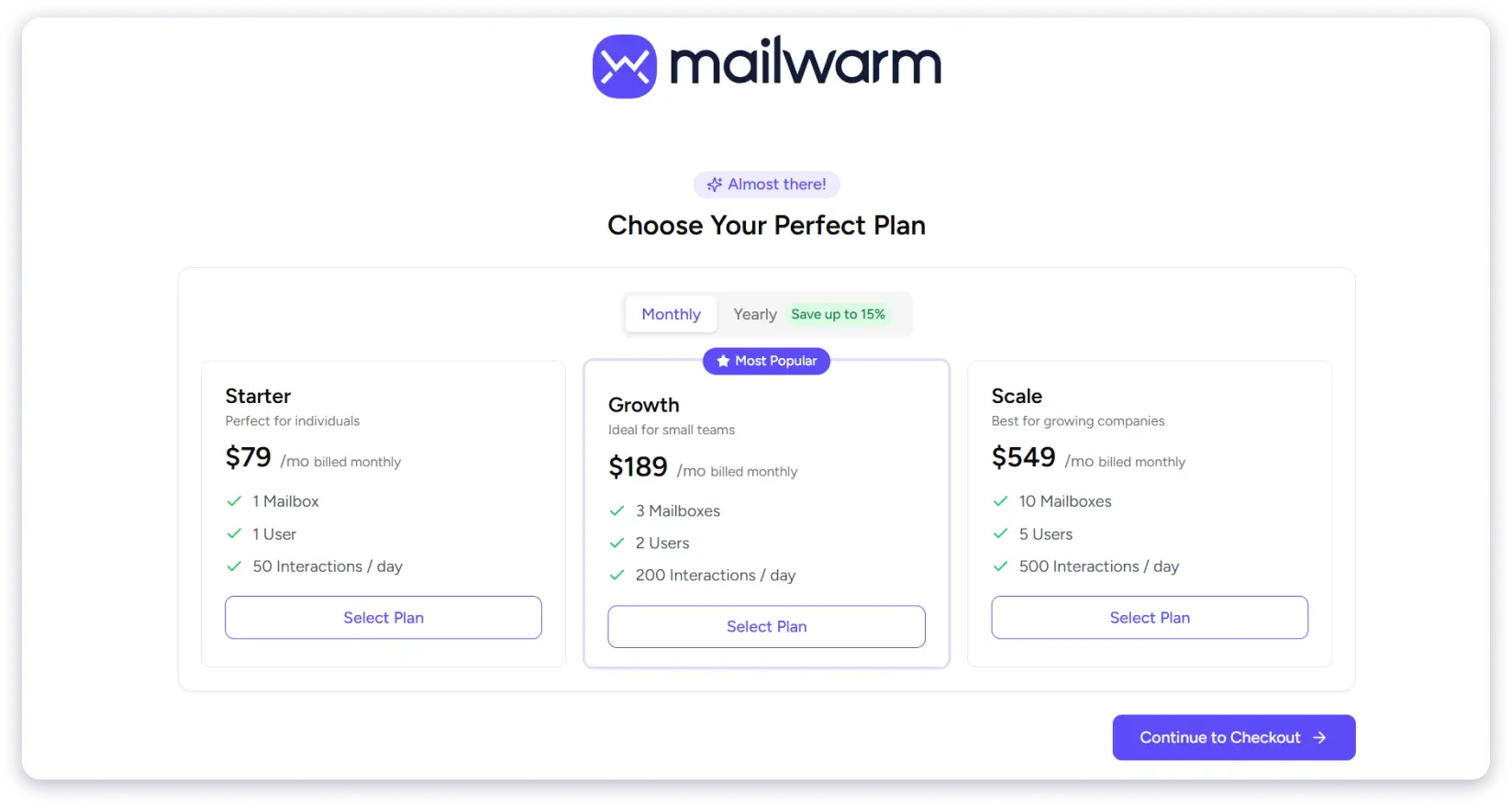
If it were not for testing and review purposes, I personally would not have considered paying for Mailwarmat at all!
After purchasing, the setup process was straightforward.
You can connect your accounts via SMTP, tweak the warm-up setting, and start your warm-up.
My email account was warmed up in 2 to 3 weeks’ time.
I ran an inbox placement test with 53 emails sent from professional and personal inboxes:
Overall results
- Inbox – 55% (29/53 emails)
- Spam – 21% (11/53 emails)
- Others – 15% (8/53 emails)
- Undelivered – 9% (5/53 emails)
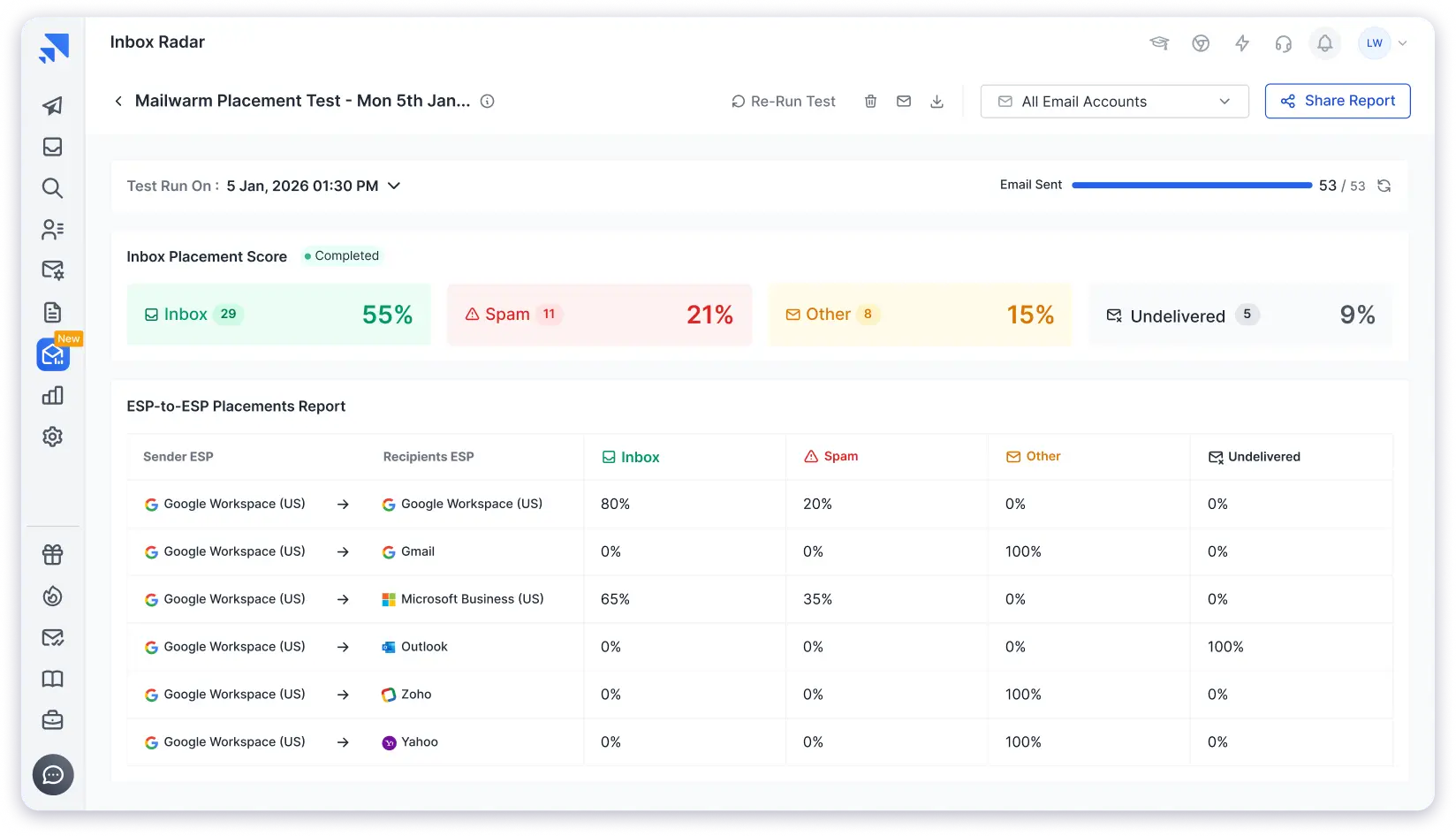
Inbox placement by ESP
- Google Workspace (US) → 80% Inbox and 20% in Spam
- Gmail → 100% landed in Other
- Microsoft Business (US) → 65% Inbox and 35% in Spam
- Outlook → 100% Undelivered
- Zoho → 100% Other
- Yahoo → 100% Other
For the price paid, these results do not justify the cost.
In the next section, I break down the pros and cons of Mailwarm to summarize where it performs well and where it falls short.
Pros and Cons of Mailwarm
Pros
- Simple setup
- Real time spam score tracking to monitor domain health during the warm up process
- Human-like sending and engagement patterns that follow gradual warm up practices
Cons
- High cost. At 79 dollars per mailbox per month, it is difficult to justify for most teams
- No free trial or free plan to test the product
- Limited public review data
- Email deliverability tends to drop once warm-up is paused
- Managing multiple accounts or domains requires manual effort
- High spam rate for professional email accounts based on testing results
Does Mailwarm Actually Make Sense for You?
Mailwarm comes with a few fundamental limitations that are hard to ignore.
- It is expensive
- Offers no free trial
- It is not built for scaling across multiple inboxes
- And shows mixed results depending on the email provider.
When you put all of this together, the value does not line up with the price being charged.
Considering these factors, exploring other alternatives to Mailwarm makes more sense than committing to it in 2026.
Mailwarm Alternative You Should Consider in 2026
A more practical alternative to Mailwarm in 2026 is TrulyInbox.
Here’s why I recommend it:
- It offers a forever-free plan
- It is significantly more affordable, with paid plans starting at $29/month
- All paid plans allow you to connect unlimited email accounts for warm up
The affordable pricing and scalability make it ideal for:
- Freelance Lead Gen. Experts
- SMB’s
- Enterprise Businesses
- and, Agencies
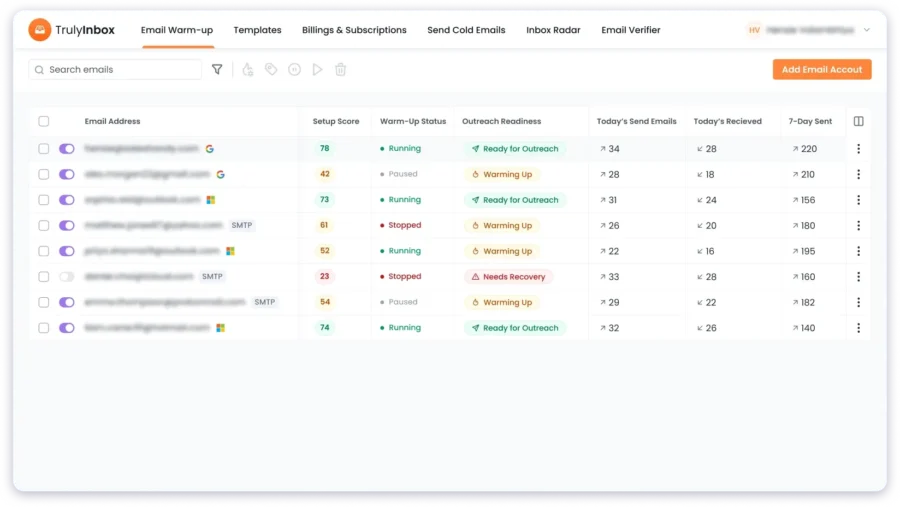
Moreover, unlike Mailwarm, adding and managing multiple inboxes is very easy!
You can bulk-import email accounts for warm-up using a CSV file, making scaling much easier.
TrulyInbox also provides a detailed graphical reporting dashboard, which helps you track warm-up progress and inbox placement trends.
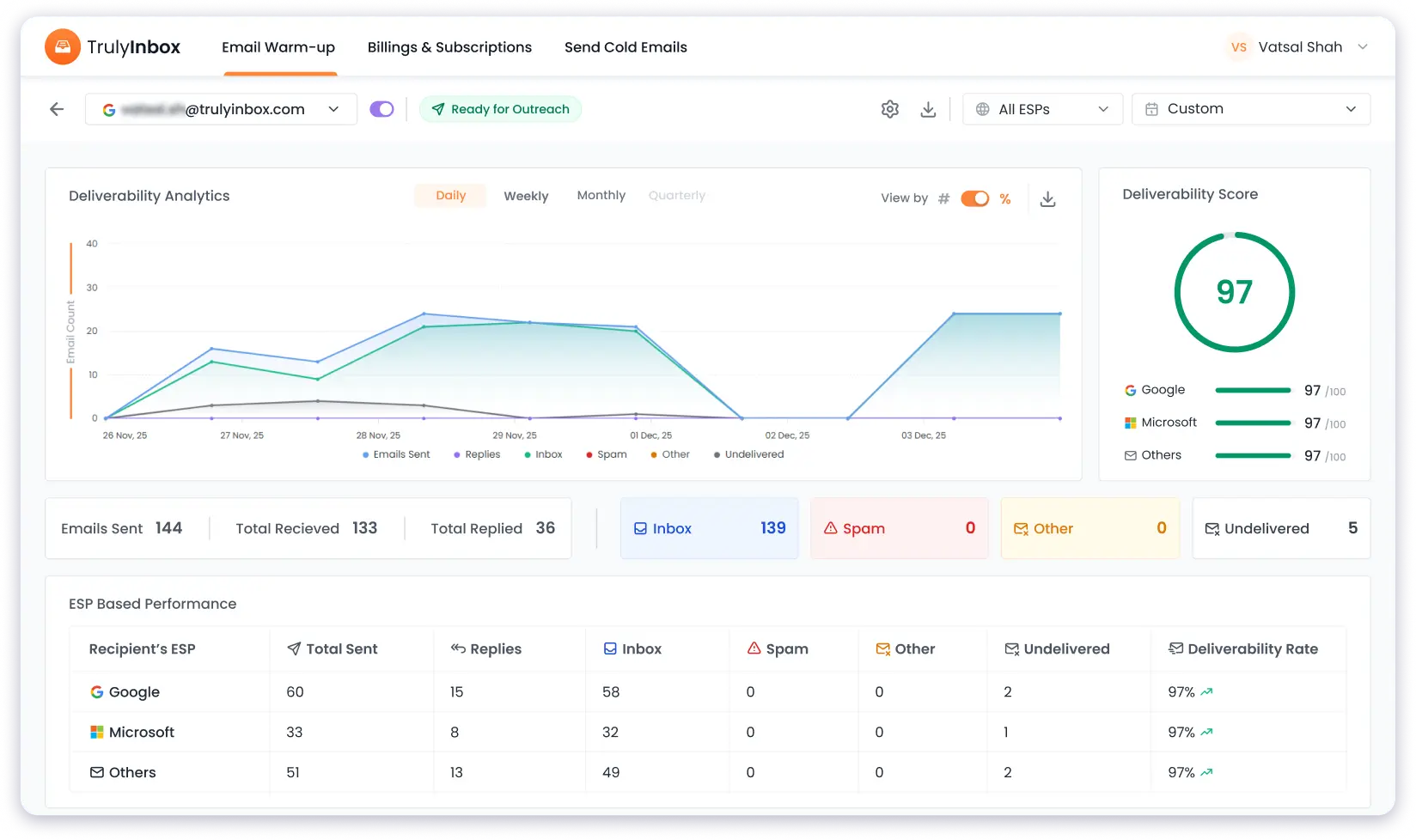
So, if you want flexibility, scalability, and better value for money in 2026, TrulyInbox is definitely a go-to choice.
Start with the free plan and see how it works for you before upgrading.
Mailwarm Reviews – FAQs
1. Does Mailwarm Actually Improve Inbox Placement?
Mailwarm can improve inbox placement while the warm up is actively running.
However, results vary by email provider, and some users report that deliverability declines once the warm up is paused or stopped.
2. Is Mailwarm Worth the Price in 2026?
At $79 per month for warming a single inbox, Mailwarm is difficult to justify in 2026, especially when more flexible and scalable tools are available at a lower cost.
3. Does Mailwarm Offer a Free Trial?
No. Mailwarm does not offer a free trial or free plan.
You have to pay up front before you can test the product.
4. How Long Does Mailwarm Take to Warm Up Email Accounts?
Based on testing and user feedback, Mailwarm typically takes around 2 to 3 weeks to warm up an email account, depending on the inbox provider and prior sending history.
5. Is Mailwarm Good for Agencies or Teams With Multiple Inboxes?
Mailwarm is not well suited for agencies or teams managing multiple inboxes.
Pricing is per mailbox, scaling is expensive, and managing multiple accounts requires manual effort.
6. Who Should Consider Mailwarm?
In most cases, Mailwarm is hard to recommend in 2026.
If cost and flexibility are not a concern, you can go for Mailwarm.
However, for anyone looking for a cost-effective email warm-up solution in 2026, it makes more sense to explore other solutions.
7. Are There Other Alternatives to Mailwarm Other Than TrulyInbox?
Yes. There are several alternatives to Mailwarm.
However, TrulyInbox stands out because it offers a free plan, supports unlimited inboxes on paid plans, and is built for scalability.